

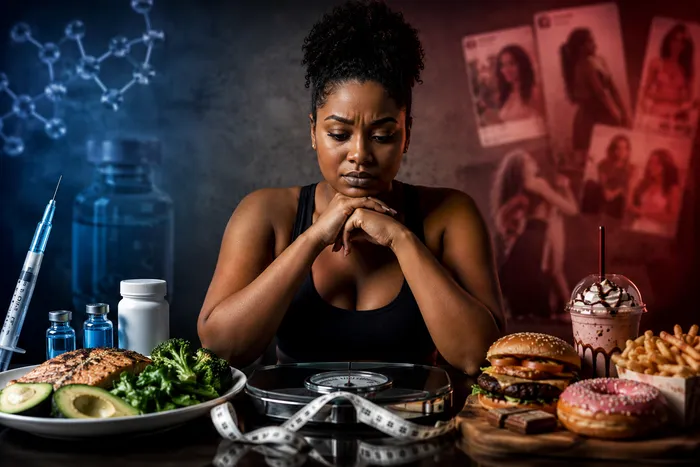
As with any medical revolution, the meteoric rise of these drugs has brought a complex mix of life-changing benefits, dangerous side effects, and a booming, highly illegal shadow market.
Image: AI ChatGPT
It seems like no matter where you go, from a family braai to office chatter, or even just scrolling through your social media feeds, GLP-1 weight-loss drugs are on absolutely everyone’s lips.
It is the much-talked-about medication of the decade, promising a modern miracle for weight loss.
But as with any medical revolution, the meteoric rise of these drugs has brought a complex mix of life-changing benefits, dangerous side effects, and a booming, highly illegal shadow market.
Let's break down the good, the bad, and the ugly of the GLP-1 craze.
To understand the hype, we have to look at the science. GLP-1 stands for "glucagon-like peptide-1," which is a hormone naturally produced in your small intestine.
This hormone is a multitasker: it tells your pancreas to release insulin to manage your blood sugar, blocks the release of additional glucose into your bloodstream, and drastically slows how quickly your stomach empties.
Most importantly, GLP-1 sends a direct signal to your brain telling you that you are full.
Drugs like Ozempic, Wegovy, Mounjaro, and Zepbound are GLP-1 receptor agonists, meaning they mimic the action of this natural hormone.
By artificially raising the levels of this hormone, these injectable medications quiet what many patients call "food noise," drastically reducing hunger and calorie intake.
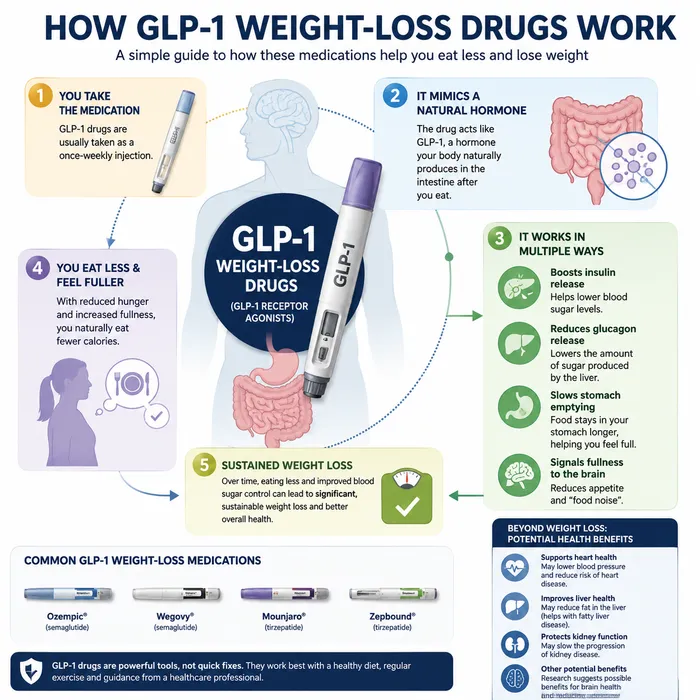
This hormone is a multitasker: it tells your pancreas to release insulin to manage your blood sugar, blocks the release of additional glucose into your bloodstream, and drastically slows how quickly your stomach empties.
Image: AI ChatGPT
Originally approved to treat type 2 diabetes, doctors quickly noticed a remarkable side effect: significant weight loss.
For the millions of people globally who struggle with obesity, a complex, chronic disease, these drugs have been a game-changer.
But the benefits actually go far beyond shedding kilos.
These medications are proving to be genuinely revolutionary across the board.
Studies show that GLP-1s can lower blood pressure, improve fatty liver disease, and even drastically reduce the progression of kidney disease and the risk of heart attacks and strokes.
Fascinatingly, because GLP-1 receptors are also located in the areas of the brain associated with impulse control and reward, researchers are finding that these drugs can curb other addictive behaviours, too.
Patients taking them have shown a decreased risk of alcohol, cannabis, and opioid addiction, and the drugs are even being linked to a lower risk of cognitive decline, like Alzheimer's and dementia.
We can't talk about GLP-1s without talking about Hollywood. Celebrities have played a massive role in destigmatising these medications, bringing them directly into the mainstream.
Tennis legend Serena Williams told “People” magazine that after extensive sports training and dieting failed to help her lose baby weight, she turned to a GLP-1, stating, "I knew my body was missing something it needed. For me, the answer was GLP-1s".
Oprah Winfrey has also been highly outspoken. In an interview with “People” magazine, she said, "In my entire life, I never dreamed that we would be talking about medicines that are providing hope for people like me who have struggled for years with being overweight or with obesity."
She also shed light on the chronic nature of the drug, noting that after she tried to stop taking it, she regained weight, realising, "It’s going to be a lifetime thing".
Other celebrities have used their platforms to call out the secrecy surrounding the trend. On an episode of “Watch What Happens Live with Andy Cohen”, comedian Amy Schumer blasted the culture of hiding GLP-1 use in Hollywood, saying, “Everybody (is) lying, everyone’s like, ‘Oh, smaller portions,’ like shut the f*** up, you’re on Ozempic or one of those things. Just be real with the people.”
As magical as these drugs sound, they are serious medical interventions that can produce real side effects. The most common issues are gastrointestinal: intense nausea, vomiting, and diarrhoea, particularly when starting the drug or increasing the dose.
However, there are many more severe, albeit rare, risks.
These include pancreatitis, acute kidney injury, gallbladder disease, and even gastroparesis, a dangerous condition where the stomach essentially becomes paralysed.
But perhaps one of the most alarming warning signs of GLP-1 misuse is how it intersects with disordered eating.
Because the medication blunts appetite, some claim that it can make extreme, dangerous starvation feel deceptively easy.
Eating disorder specialists are deeply concerned about patients abusing the drug to achieve rapid weight loss.
In a survey published in “Obesity Reviews”, some GLP-1 users admitted to restricting their intake to a dangerously low 400 to 600 calories a day, with one participant reporting they subsisted purely on water and Diet Coke.
The warning signs of this abuse include lying to online telehealth providers about starting weight to secure a prescription, sudden and extreme emaciation, and an obsessive reliance on the drug purely for cosmetic weight loss rather than health management.
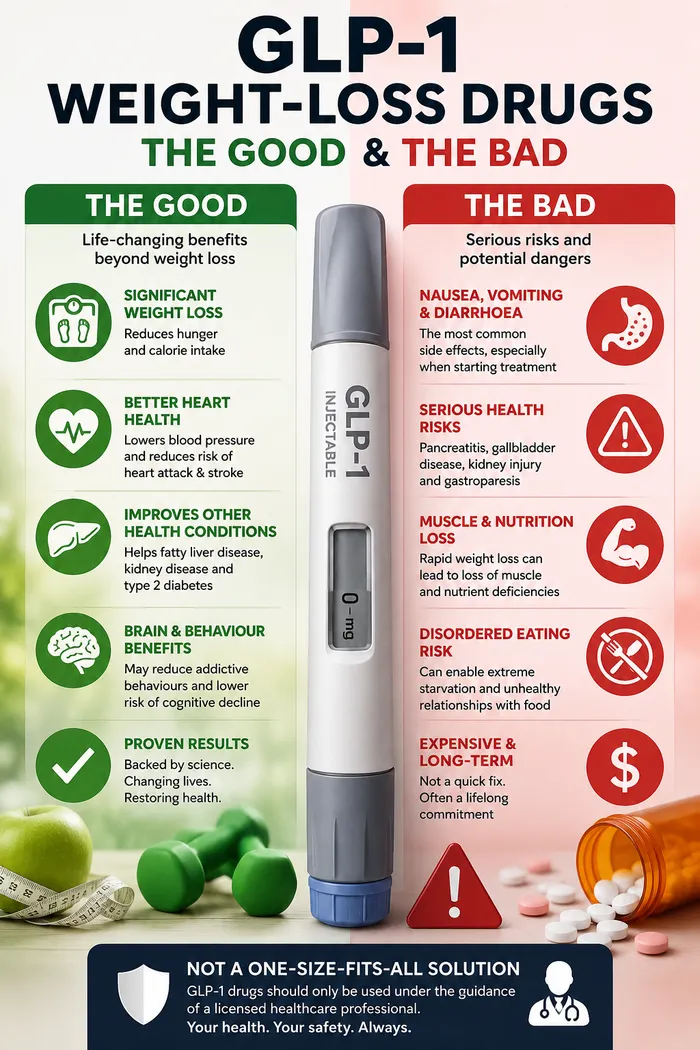
With the good there always comes the bad.
Image: AI ChatGPT
Where there is massive demand and short supply, criminals are bound to follow. The market is currently being flooded with illegal, fake, and dangerous counterfeit GLP-1 products.
Scammers are running rampant online.
They are using AI to generate fake celebrity and doctor endorsements on social media to push fraudulent weight-loss drugs.
People are being targeted by fake text messages claiming their "prescription is approved," which leads to phishing sites designed to steal credit card and medical information.
In some terrifying instances, people are ordering what they think is Ozempic online, only to receive untested, mislabeled liquids or powders that contain absolutely zero active GLP-1 ingredients.
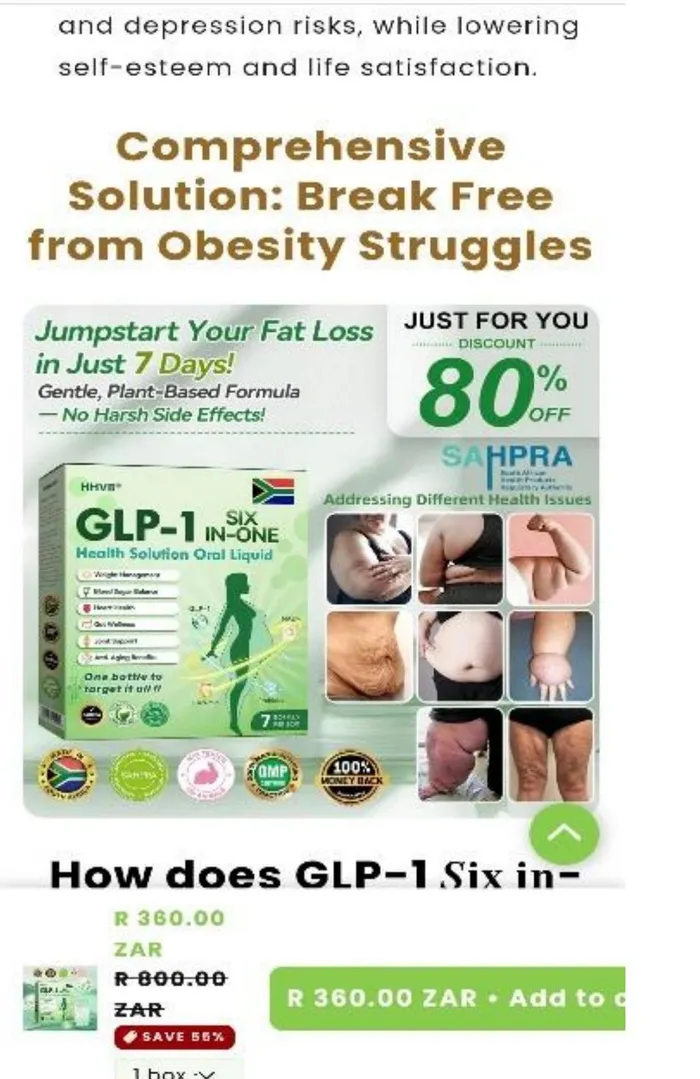
Fake ads will show products displaying SAHPRA’s logo claiming to be approved by them.
Image: Screenshot
In South Africa, the crackdown on this shadow market has been fierce.
The South African Health Products Regulatory Authority (SAHPRA), alongside the South African Pharmacy Council (SAPC), recently executed a massive raid on a Pretoria compounding pharmacy.
While "compounding" is normally meant for making specific medicines for individual patients, SAHPRA found this facility was illegally manufacturing and commercially marketing unregistered GLP-1 and GIP injectables.
The regulators cited severe red flags at the facility, including the illegal importation of active pharmaceutical ingredients, a lack of sterile manufacturing conditions, and a high risk of contamination.
Furthermore, SAHPRA noted that there had been reports of adverse events and hospitalisations linked to these products.
Speaking out on the raid in an official SAHPRA press release, CEO Dr Boitumelo Semete-Makokotlela warned the public: "The unlawful manufacture, importation, advertising, and distribution of unregistered medicines pose a serious risk to public health. We will not hesitate to act to protect patients and safeguard the integrity of South Africa's regulatory system."
If you believe a GLP-1 medication is right for you, there is only one safe and legal way to go about it.
You must consult with a licensed, registered healthcare provider who can evaluate your medical history, BMI, and overall health to determine if you are a safe candidate.
If approved, your provider will write a legitimate prescription that must be filled at a registered, state-licensed pharmacy.
Do not fall for social media ads offering cheap, prescription-free alternatives, and never purchase injectable medications from unregulated online sites.
These drugs require medical oversight, proper refrigeration, and specific dosing schedules. Your health is simply not worth the risk of a shortcut.