

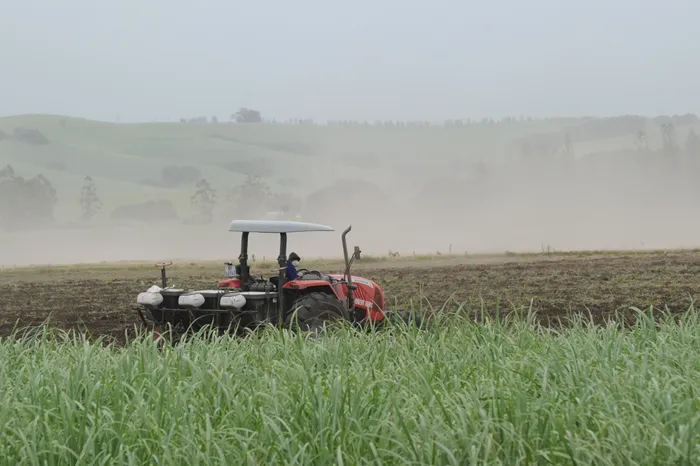
The announcement of a new bioethanol plant investment in KwaZulu-Natal brings hope to sugarcane farmers facing financial difficulties.
Image: Independent Newspapers Archives
The embattled sugarcane industry in KwaZulu-Natal may soon receive a significant lifeline with the announcement of a proposed R17 billion bioethanol plant “earmarked” to be built in the province.
A global agricultural company, UPL, has revealed plans to construct this facility, which could provide much-needed support to the thousands of sugarcane farmers whose livelihoods are under threat due to the financial difficulties faced by the sugar giant Tongaat Hulett.
Tongaat Hulett is currently facing the threat of liquidation, raising concerns among local farmers. Earlier this month, during an investment conference held in Gauteng, various companies made pledges for investments in South Africa, with UPL’s commitment being a highlight of the event. In a statement from the Department of Public Works and Infrastructure, it was noted that the investment, amounting to approximately R17 billion, is linked to a large-scale bioethanol production facility.
This project will utilise sugarcane and maize as feedstock, supporting the development of an integrated agricultural and energy value chain. It said Infrastructure South Africa, an entity of the Department of Public Works & Infrastructure, has played a crucial role in facilitating this project by bringing together stakeholders from the agricultural, energy, and financial sectors.
This collaboration includes supporting engagements between UPL and a major development finance institution to explore project preparation and financing opportunities, as well as fostering broader collaboration to move the project towards implementation.
The statement added that the bioethanol plant has significant potential, including the cultivation of approximately 400,000 hectares of sweet sorghum and the production of up to 1.3 billion litres of bioethanol annually. “This initiative is expected to inject substantial amounts of money directly back into both small and large-scale farming operations, positioning South Africa as a potential leader in the biofuels sector while supporting rural development and job creation,” said the statement.
Sources close to the investment have indicated that the proposed biofuels facility is likely to be located in KZN. “This development is anticipated to provide a critical lifeline to the province’s struggling sugar industry, particularly for small-scale farmers who have faced sustained pressure in recent years.
“The project is expected to create approximately 25,000 direct and indirect jobs, representing a significant economic boost for KwaZulu-Natal. As a global leader with an estimated valuation of around R150 billion and operations in 138 countries, UPL’s involvement brings both scale and credibility to the initiative.
“Importantly, this investment offers renewed hope to farmers impacted by the financial distress and liquidation risks associated with Tongaat Hulett. By creating a viable alternative market for sugarcane — utilised as a key feedstock for biofuel production — the project helps stabilise incomes, sustain farming operations, and protect rural livelihoods,” said the source.
Dr Marilyn Govender, head of Diversification at the South African Farmer Development Association (SAFDA), welcomed the move.
“Yes, SAFDA is aware of the announcement made by UPL at the South African Investment Conference recently and the support statements made by the government. “SAFDA would welcome the support and championing of biofuels by the South African government, which requires the subsidy or incentive to make biofuels production from a primary agricultural feedstock like sugarcane viable and the mandatory offtake for the bioethanol produced.
“This requires championing by the government together with the investment support. SAFDA would welcome such investment in South Africa and the province and for the participation of our sugarcane farmers in the bioethanol value chain,” she said.
The Minister of Public Works and Infrastructure Dean Macpherson told The Mercury that it would be his preference for the plant to be built in KZN.
“Based on the engagement with the executive management of the company, they felt the same.” He said KZN has many advantages in this space as it would be able to supply the stock needed to run the company, and furthermore, the company will be looking to ship out produce from the urban port.
Macpherson, in a statement, said the R17bn investment demonstrated what is possible when the “government plays an active role in facilitating partnerships, removing obstacles, and aligning stakeholders behind a common objective.”
A Durban businessman who had previously ventured into this type of business welcomed the project.
“As someone who ventured into biofuels in South Africa as early as 2010, at a time when the industry lacked both policy support and market certainty, it is deeply encouraging to see multi-billion-rand capital now being committed to bioethanol at scale.
“Back then, the vision was clear, but the ecosystem was not ready — today, the convergence of energy security, agricultural optimisation, and climate imperatives has created the right conditions for success.
“This level of investment signals a long-overdue shift from concept to execution, and has the potential to revitalise rural economies, unlock value across the sugarcane sector, and position South Africa as a serious player in the global biofuels market. “It is particularly meaningful to witness this progress knowing how many early efforts laid the groundwork for what is now becoming a national priority,” he said.
For more stories from The Mercury, click the link THE MERCURY