

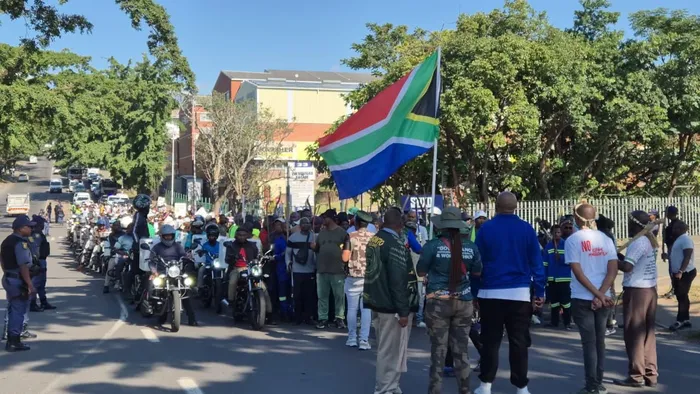
Tensions in eThekwini have escalated into a humanitarian and security concern after refugees, asylum seekers and migrants reportedly fled their communities amid growing threats, intimidation and violence.
Image: Sibonelo Ngcobo/Independent Newspaper.
A growing humanitarian and security crisis is unfolding in Durban according to human rights organisations who say refugees, asylum seekers and migrants have reportedly been forced to flee their homes amid rising threats, intimidation and violent incidents.
The situation has prompted urgent intervention calls from both the South African Human Rights Commission (SAHRC) and Kopanang Africa Against Xenophobia (KAAX), as fears of further escalation intensify.
According to KAAX, vulnerable communities were left with little choice but to seek refuge at the Durban Central Police Station after weeks of mounting insecurity.
However, the organisation says the response they received there has raised serious alarm about the treatment of displaced people.
KAAX reports that what began as a plea for protection ended in confrontation.
"Reports emerging from the ground indicate that vulnerable people, including women and children, were denied meaningful protection and later forcibly and violently dispersed by police using stun grenades and rubber bullets."
The organisation claims that the situation may have escalated further.
"There was possibly some live ammunition used and a video taken by an observer clearly shows that the police engaged in excessive force and treated the refugees, asylum seekers and migrants as if they were criminals."
For many of those affected, KAAX says the crisis represents not only a breakdown in safety, but a failure of protection systems meant to safeguard people in distress.
The organisation argues that the gathering at the police station came after individuals spent hours "simply pleading for the police to provide protection and safety (which is after all, one of the core jobs of the police)."
KAAX warned that the current climate reflects a broader and more dangerous trend.
"We have been warning for some time now that the increase in vigilante activity - often undertaken with the tacit support of the police and other government authorities - targeting asylum seekers, refugees and migrants in general is extremely dangerous."
The organisation adds that the situation in Durban must be urgently addressed to prevent further deterioration, cautioning against a repeat of past xenophobic violence in South Africa.
In response to the unrest, the South African Human Rights Commission (SAHRC) has expressed grave concern over reports of attacks targeting non-nationals, warning that such developments strike at the heart of constitutional protections.
"We are deeply alarmed by recent reports and circulating footage of violent attacks that appear to target non-nationals...South Africa's constitutional values of ubuntu, dignity, equality, and the rule of law, as well as the social cohesion."
While acknowledging the right to protest, the SAHRC emphasises that: "members of the public may raise grievances and protest, but such actions must remain peaceful and lawful.
"Violence, intimidation, hate speech, looting, and property destruction are unacceptable and constitute serious human-rights violations and criminal conduct."
The Commission also stressed the importance of legal accountability.
"Criminal acts allegedly committed by some non-nationals, as reported on social media, should not be a gateway to inflaming tensions those with knowledge of any criminal act, whether committed by a South African or a non-national, should report it to the SAPS for investigation."
The SAHRC warns that taking the law into one's own hands (vigilantism) may lead to attacks on people.
SAHRC has called on authorities, including the Minister of Police, to act swiftly to contain the violence, particularly in KwaZulu-Natal, and to prevent similar incidents in other provinces. It also urged community leaders and residents to reject violence in favour of dialogue, tolerance and legal processes.
"South Africans have a duty to abide by the laws and regulations of the country. Anyone alleged to have committed a crime, irrespective of nationality, should be subject to the rule of law, with arrest and trial in a court of law."
As tensions rise, both organisations are calling for urgent intervention, humanitarian support and coordinated government action to prevent further displacement and potential escalation.
IOL News