

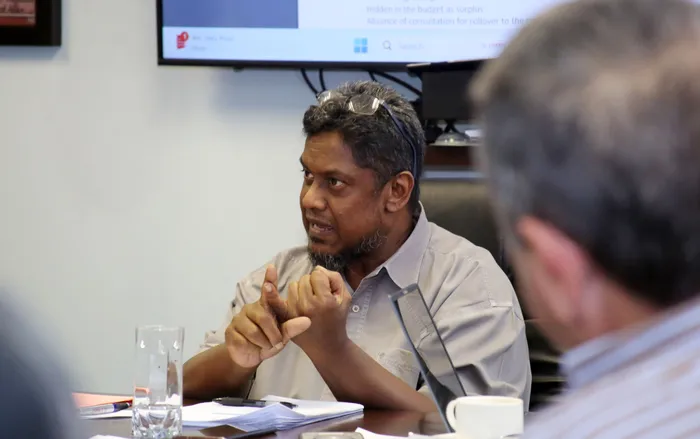
Asad Gaffar, the chairperson of the eThekwini Ratepayers Protest Movement (ERPM), has rejected the 2026/27 proposed municipal tariff increases.
Image: Tumi Pakkies / Independent Newspapers
Representatives of the eThekwini ratepayers will have their say on the 2026/27 budget during a meeting scheduled for April 16.
The municipality has invited the representatives of the ratepayer association to consult on the Integrated Development Plan and budget on Thursday, April 16, regarding the proposed budget and the acceptance of the proposed tariff increases.
Asad Gaffar, the chairperson of the eThekwini Ratepayers Protest Movement (ERPM), rejected the draft budget and proposed tariff increases, labelling them as inadequate, incomplete, and non-compliant with the principles of transparency, accountability, and meaningful public participation required by the Municipal Finance Management Act (MFMA).
The ERPM identified what they believe are critical shortcomings in the draft budget released for public comment.
These shortcomings included infrastructure surcharge, water losses, outsourced services expenditure, water tanker services, security services costs, revenue generated by the ward, misallocation of parks and gardens funding, and salary costs.
“The infrastructure surcharge imposed on ratepayers is hidden within water trading services instead of being listed as a separate item. This surcharge should be ring-fenced, as it is a mandatory tariff. The lack of transparency makes it impossible to determine how much revenue has been collected and how these funds are being spent,” Gaffar stated.
He was also concerned about the spending on outsourced security services for municipal contractors and projects not listed as a line item, which he claimed denied ratepayers insight into costs and beneficiaries.
“The document does not reveal the revenue generated per ward, nor how much of that revenue is reinvested into those communities. Public parks across eThekwini remain severely neglected,” he said.
Gaffar said his requests to participate in the drafting of the budget were rejected.
“Presenting an incomplete document for acceptance at this stage shows disregard for meaningful participation. The budget fails to address the severe shortage of informal housing. With over 600 informal settlements and current delivery rates, it is estimated that it would take approximately 90 years to meet existing demand.”
eThekwini Mayor Cyril Xaba presented the draft budget for the 2026/27 financial year at a council meeting, where he stated that the municipality faces internal challenges of ageing infrastructure, service delivery backlogs, and growing demand driven by urbanisation and economic pressure.
“These challenges are further compounded by the increasing cost of delivering basic services in an environment of rising input costs and constrained revenue growth. The same reforms that demand greater discipline also create the conditions for improved efficiency, enhanced infrastructure investment, and stronger financial sustainability.”
Xaba said the budget addresses the “tough times” by balancing fiscal discipline with targeted revenue growth, aiming to manage high debt while supporting vulnerable households, infrastructure, and job creation. It is a budget based on the principles of sustainability.
“The budget is based on realistic revenue projections and projects that are ready for rollout,” he said.
The budget includes proposed tariff increases:
15% for residential water (16% for businesses)
10.5% for electricity
5% for property rates
13% for residential sanitation (14% for businesses)
13% for refuse removal
5% property rates increase
zainul.dawood@inl.co.za