

Health MEC Nomagugu Simelane emphasises the importance of addressing stormwater drainage issues during a provincial discussion.
Image: File/ Sandile Ndlovu
A proposal for a dedicated programme to engage cities on storm drainage management and an urgent call for a comprehensive provincial analysis on the state of infrastructure against climate change risks were highlights of recent discussions among KwaZulu-Natal political leaders.
Health MEC Nomagugu Simelane made a proposal for a programme where the provincial government engages cities, both the metro and secondary cities, on stormwater drainage.
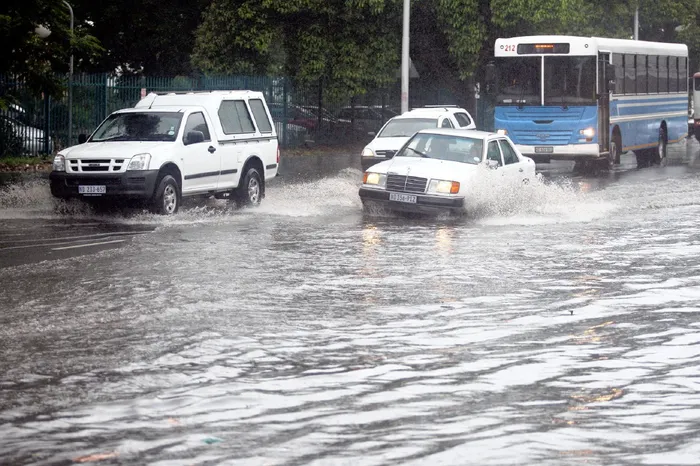
“When you look at eThekwini and some other areas, you often find that in as much as the weather was a problem, the effect of storm drainage that is not properly managed ends up causing a lot more damage than it would have been caused ordinarily,” Simelane said.
She said the Climate Change Council should include engagement sessions as part of its programmes, fostering a collective approach between the council and the cities. This is to ensure that cities do not feel isolated when addressing this specific issue.
“We all need to put our heads together and find ways of assisting because sometimes I think the problems in the drainage system are not necessarily that the municipalities are not maintaining them, but it’s the fact that their pipes are old…. This then becomes a provincial issue more than a local municipal issue,” Simelane said.
Premier Thamsanqa Ntuli said the matter of storm drainage systems holds significant importance.
“We need to ensure that we assist the municipalities so that they can access funding to address the issue of infrastructure, such as the stormwater drainage systems,” Ntuli said.
Ntuli reiterated a call he has made in the past, that they also need to tap into the private sector for collaboration, so they can also help.
Reflecting on a recent meeting in the City of uMhlathuze, Ntuli said issues were highlighting that collaboration must be enhanced so that funding is made available because municipalities are limited when it comes to finances, so collaboration in the private sector, if it can be enhanced, will also allow them to see the private sector funding the infrastructure.
“I think for the stormwater drainage system, that is what we must also look at. But we’ve not done justice as a province in analysing the state of the infrastructure when it comes to climate change,” Ntuli said.
“I’m not aware of any clarity that is on the table in terms of where we are now as a province. Where are the gaps? Which municipalities are at risk? And the funding model to mitigate the risk. I don’t think we’ve done justice there. We need to do something, maybe to put together that information.”
eThekwini Municipality deputy mayor Zandile Myeni added that municipalities need to establish climate change councils to assist in formulating the action plans from the Climate Change Council, which will also escalate to a reporting model where, quarterly, municipalities will submit progress on those programmes moving forward.
“At eThekwini, we have established the climate change council, but it’s still early days to say we are seeing progress,” Myeni said. “However, we have a target to say this platform must be a platform that we use even to communicate our vision with all the stakeholders in our city, so that the implementation issue can serve as a model understood by all partners.”
thobeka.ngema@inl.co.za