

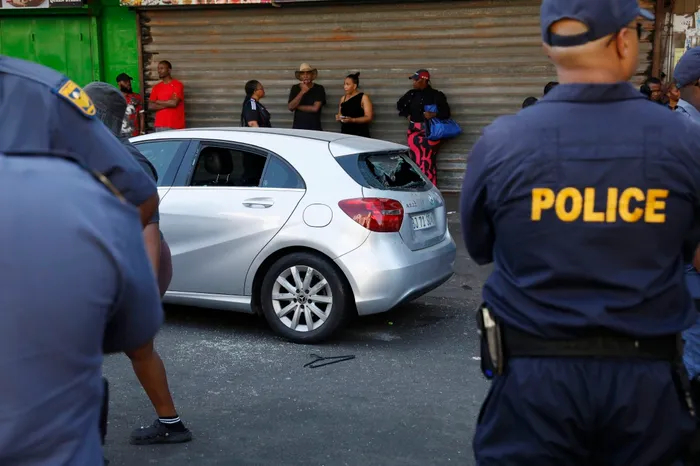
Last week, a confrontation erupted in the Durban CBD between foreign nationals and locals, leading to property damage and injuries.
Image: Doctor Ngcobo / Independent Newspapers
“There is no xenophobia in KwaZulu-Natal.” This is according to KwaZulu-Natal Premier Thamsanqa Ntuli, after delivering his keynote address at the 2026 KZN Jobs and Skills Summit. The summit was held at the Durban ICC on Tuesday.
Setting the record straight as a representative of the government, Premier Ntuli addressed the ongoing discussions in Africa and globally regarding the issue of xenophobia, which has been allegedly occurring in KZN. The premier unequivocally said there is no xenophobia in the province.
“I know that what we see there is a demonstration of civic society or organisations that are saying we are worried about people who are coming to South Africa without documents, calling for them to go back and get proper documents,” Ntuli said.
He said even the government is working to fix that problem, reiterating that there is no xenophobia in KZN.
However, he expressed concern about the criminal element among those invading the space and using the demonstrations for criminal behaviour.
“And even for the demonstrations, they can’t be every day. It's acceptable to express a message or statement occasionally, but frequent demonstrations can project instability,” Ntuli said.
“But when it’s daily, it will project a government that is not stable. It’s even worse when there’s confrontation and conflict. It presents a government that has instability or violence.”
Ntuli highlighted the importance of addressing issues within the parameters of the law. Adding that they must be law-abiding citizens while expressing their frustration and concerns.
The premier’s message comes a week after KZN police reminded those who stage protests, plan, organise, or participate in marches to do so within the parameters of the law.
KZN police spokesperson Colonel Robert Netshiunda said provincial police management will soon hold a meeting with the organisers of the marches to reach a common understanding and provide assistance and clarity where needed.
“It is illegal for a foreigner to be in the country without proper documentation; however, only mandated law enforcement officers can arrest undocumented foreign nationals and detain them pending deportation processes,” Netshiunda said.
He said police manned several marches in Durban and other parts of the province, which are mainly targeted at foreign nationals.
According to Netshiunda, there were video clips on social media showing lawlessness during some marches. At the time, several shops, both South African- and foreign-owned, were closed after threats of violence from march participants.
Netshiunda also reminded residents that intimidation can constitute a criminal offence and people must refrain from threatening others. Assaulting another person, whether a foreign national or not, is a criminal offence, and police will not stand by and watch when the law is being broken.
thobeka.ngema@inl.co.za