

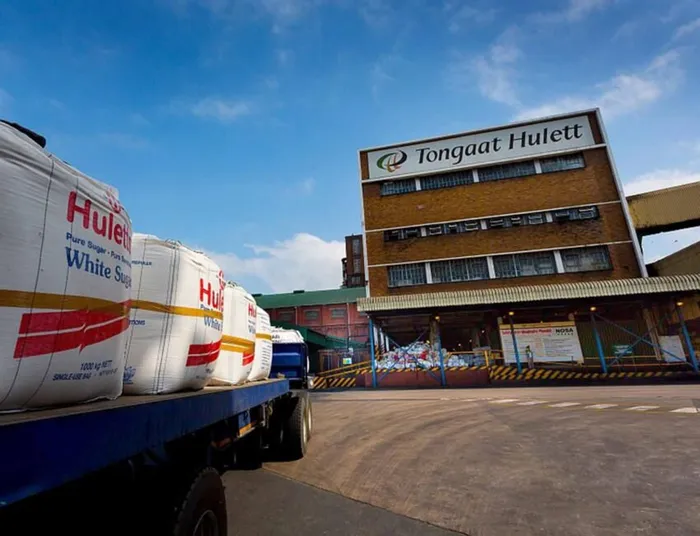
The 130-year-old Tongaat Hulett supports between 35,000 and 40,000 direct jobs at farm level and at its mills and refinery, making it an economic anchor for entire rural communities.
Image: Supplied
The farming industry is exploring ways to save parts of the embattled Tongaat Hulett company from liquidation and thousands of jobs in the sector. The farmers said a grower-led entity has been established with a view to securing the funding necessary to keep Tongaat Hulett’s mills and refinery operational.
Two organisations, the SA Canegrowers and SA Farmers Development Association (SAFDA), said with the liquidation hearing of Tongaat Hulett less than a month away and no firm solution to avoid liquidation in sight, a grower-led entity has been established to secure the funding necessary to keep Tongaat Hulett’s mills and refinery operational, without which many parts of the sugar industry would collapse.
The move has been welcomed by economic experts who said this is a potentially viable idea. The statement said the GrowerCo’s proposal is built around the long-term sustainability of Tongaat Hulett and includes small- and large-scale growers as equity partners, in stark contrast to an extractive private-equity model. It is focused on maintaining milling operations, safeguarding jobs, and preserving economic activity across rural KwaZulu-Natal.
It added that the 130-year-old Tongaat Hulett supports between 35,000 and 40,000 direct jobs at farm level and at its mills and refinery, making it an economic anchor for entire rural communities. More than 17,500 of South Africa’s 28,000 sugarcane growers supply Tongaat Hulett, the majority of whom are small-scale growers. About 77% of the sugar industry’s revenue stems from KwaZulu-Natal, where Tongaat Hulett is a dominant driver of economic activity.
Pratish Sharma, a grower who supplies Tongaat Hulett’s Maidstone mill, said the future of KwaZulu-Natal is intricately tied to the future of Tongaat Hulett. “The long-term economic and societal consequences of its liquidation would far exceed the liabilities on the company’s balance sheet. GrowerCo is a stakeholder-inclusive plan to avoid a liquidation scenario and to ensure that Tongaat Hulett's South African sugar operations can continue as a going concern,” he said.
Nicholas Ngobe, a grower supplying the Amatikulu mill, said the plan made sense, “GrowerCo not only makes sense because it puts Tongaat Hulett under the ownership of people with a long-term commitment to the sugar industry in South Africa, it is also a beacon of what true economic transformation can be.”
The statement said small-scale growers are equity partners in GrowerCo and will earn returns not only on their sugarcane but will share in equity growth over the long run. It said this creates the possibility that a sugarcane grower who today owns and farms their own land, but whose forebears may once have worked as indentured labourers in the province’s sugar fields, could become an owner in one of South Africa’s oldest sugar companies.
“Liquidation would destroy not only rural livelihoods but also value in Tongaat Hulett for its current debtors. GrowerCo estimates that debtors would be able to realise R3 billion to R4.5 billion for Tongaat Hulett if it is sold as a going concern, whereas value recovery during liquidation would be as low as R1 billion to R1.5 billion,” it said.
The statement said Tongaat Hulett’s sugar assets sit at the centre of an integrated rural economy that stretches from cane growers and mill workers to transporters, food producers, retailers, and consumers.
The interdependence of the system creates the foundation of the investment case: without functioning mills, growers have no route to market; without a sustainable supply of cane, the mills themselves have no value.
“A grower-led structure therefore helps secure both sides of the equation, creating greater long-term operational stability and sustainability across the entire value chain,” it said.
SAFDA supports the formation of GrowerCo as an important initiative aimed at ensuring that growers are not excluded from any future developments involving Tongaat Hulett and its operations.
“GrowerCo is a concept established collectively by both grower associations, recognising the need for a united approach, especially when engaging with potential funders and strategic partners. It is widely understood that investors and financiers are more likely to support initiatives that demonstrate unity and collaboration within the industry,” it said.
Economist Dawie Roodt said this is a potentially viable idea if it makes sense financially. “The biggest challenge here is that they are going to take over a loss-making entity that can't be turned around into a profit-making entity, and that is a major challenge.
“It can potentially work, and it's not a bad idea, but the concern is that they take over an entity that is loss-making, and everyone finds themselves underwater.”
For more stories from The Mercury, click the link THE MERCURY